Looking to buy a motorhome? Are you aware of the weight limits and restrictions? If not, keep reading to find out more information on what you need to consider if you exceed 3,500kg in your motorhome.
A motorhome’s weight matters because if you are driving a motorhome that exceeds the maximum authorised mass, you could make a costly and dangerous mistake, including tow vehicle damage, voided warranty, damage to rig and unsafe driving.
Motorhome Weights & What The Numbers Mean
Understanding motorhome weights is to your advantage and usually you can find the information you need on the vehicle identification number (VIN) plate or the chassis plate provided by motorhome manufacturers.
Gross Vehicle Weight (GVW) is the maximum your motorhome can weigh or the maximum authorised mass of your motorhome. You will find the GVW figure on the plate of your vehicle, but there is also a simple calculation, which consists of adding the combined weight of the driver, passengers, luggage, fuel, and other necessary fluids.
Vehicle Unladen Mass (VUM) is the empty weight of the motorhome when its not carrying any load of passengers, including all the parts of the vehicle minus the weight of the fuel and driver. You are able to find your motorhome’s unladen weight in the manufacturer’s manual or on a plate fitted to the motorhome.
Maximum Authorised Mass (MAM) is the maximum weight of a motorhome, including a full fuel tank and everything else in the vehicle. The MAM figure will be located in the engine compartment on the VIN plate, in the manufacturer’s handbook and the chassis plate.
Mass in Running Order (MRO) is the weight the manufacturer thinks the motorhome should weigh once it leaves the factory. To find out the MRO you should speak to your dealer or look on the manufacturer’s website. If you are buying a new motorhome, the MRO figure can be controversial because manufacturers like to sell vehicles with a high payload, however, because it doesn’t include extras like awnings and leisure batteries, it is easier than used motorhomes. Getting the MRO figure for a used motorhome is difficult, but the easiest way to find it is to check the original sales documentations or if that is not possible, ask the dealer to empty the content of the motorhome and take it to a weighbridge for an accurate estimate.
What is Motorhome Payload?
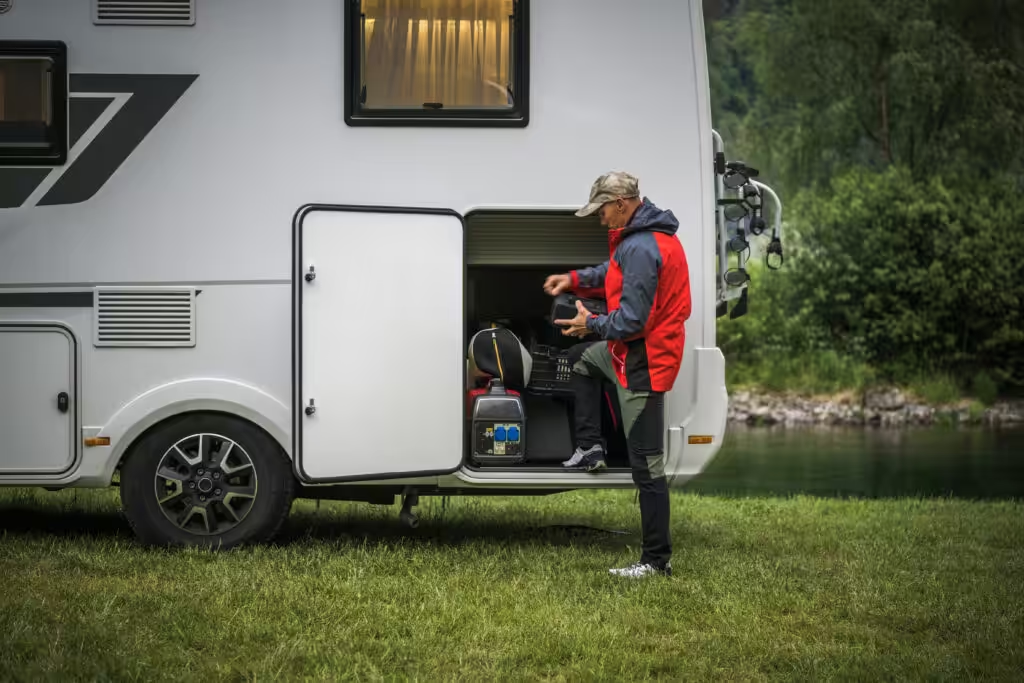
Motorhome payload is essentially everything you put into your motorhome, including awnings, double doors, spare tyres, generators and extra batteries. The maximum permitted payload details are available in the manufacturer’s manual, and to get an accurate payload figure, you need to deduct the MRO from the MAM. Remember to deduct the weight of your leisure batteries and gas bottles before calculating the payload.
If you have the C1 category on your driving licence, you can get your motorhome weight replated to a higher one, but upgrading your motorhome’s weight limit will require mechanical alterations to increase the laden mass that both the front and rear axles can handle. If you are wanting to upgrade your motorhome weight plate, it is important to speak to your dealer or manufacturer first to be sure the chassis can handle more weight.
To conclude, it is important to know the weight of your motorhome, and know where to find the relevant information that you need. As we have mentioned, there are many risks and problems with going over the recommended weight, so whether you’re buying a new motorhome, upgrading your current one, or have your doubts, it’s important to check the weight of your motorhome.

Written by Charlie Holland
Frequently Asked Questions
Payload is the actual weight of the things you have inside your motorhome. It is the difference between the GVWR (Gross Vehicle Weight Rating) and the tare weight of your vehicle.
Yes and it is very important that you don’t exceed this limit. Overloading your motorhome can cause excess wear and tear and also invalidate your licence.
Once you have weighed your vehicle properly, compare that to the chassis limits and plated MTPLM, you then know ideally how much you need to reduce. Remove what you don’t use, for example, spare awnings, unused kitchen kits, excess bedding or multiple outdoor chairs. It’s important to be ruthless, we say a good rule is, if you haven’t used it in 12 months, then it shouldn’t be onboard.

Vogue
Exclusive Vogue - a special for everyone!
View our selection of Vogue special edition leisure vehicles available, only found here at Spinney.
Spinney branches
Spinney dealership