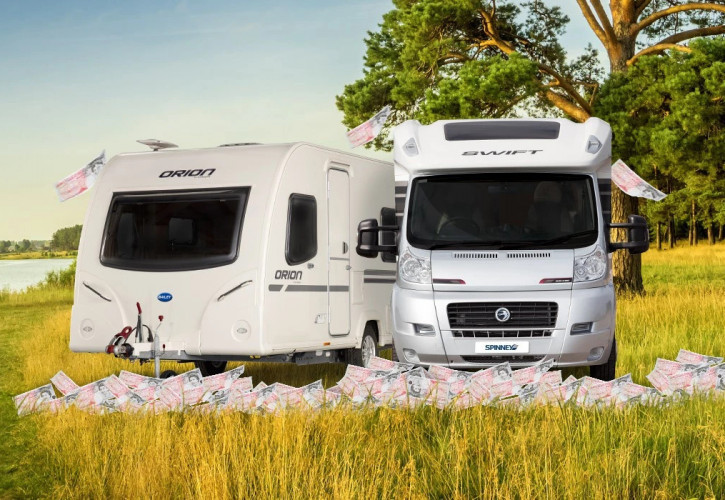
Depreciation: “a reduction in the value of an asset over time.”
This is a complete guide to motorhome depreciation in 2023. So if you want to know what causes motorhomes to lose value, the speed at which they lose their value, and the ways to prevent them from losing value, you’ll find out in the following sections.
What influences motorhome depreciation?
Depreciation of any vehicle is inevitable and of course unpreventable, however the factors which cause a motorhome to lose value somewhat differ to that of a car or other road vehicles.
Age, mileage, brand and condition all have an effect on the depreciation rate, as does supply and demand.
Brand
Generally speaking, established motorhome brands that maintain a strong presence in the market will depreciate slower than less popular brands. Well-known motorhome brands may include:
- Auto-Sleepers
- Auto-Trail
- Bailey
- Elddis
- Rapido
- Roller Team
- Swift
Usage
As with any vehicle, the way the motorhome has been used throughout its lifetime will affect its depreciation rate. However, this doesn’t just mean mileage, for example, a rental motorhome will depreciate faster than a privately owned motorhome of the same age. It’s worth noting as well that the year of the motorhome will have more of an effect on its depreciation rate than its mileage, since most motorhomes often deteriorate due to age-related issues before mechanical issues.
Adaptations
It would be easy to assume the installation of aftermarket products (also known as adaptations or extras) would increase the value of your motorhome, however this isn’t always the case. Accessories of a lower specification than the base vehicle, or accessories installed ‘unprofessionally’ by the vehicle owner, could in fact DECREASE the value of the motorhome, and therefore accelerate the depreciation rate. When fitting adaptations or extras, it is always sensible to get this done professionally. Whilst this may come at an added cost initially, it will likely prove financially beneficial in the long run – provided you keep the paperwork!
Market Events
One factor you could argue we have no control over when it comes to motorhome depreciation is significant market events and economic issues. You’ve only got to take a look at the impact Covid-19 had on the motorhome industry to see how influential these events can be on the value of your motorhome.
The principle in this instance is quite simply basic supply and demand – the demand for motorhomes rose drastically in lockdown when the UK borders were closed, and motorhome manufacturers were unable to increase their supply.
As a result, the price of used motorhomes increased as everybody wanted to get their hands on one. It’s probably safe to say that this won’t last forever though, and the standard depreciation rate of motorhomes will be restored, concurrent with supply and demand rectifying itself again.
How fast do motorhomes lose value?
There is no set rate or velocity at which a motorhome depreciates, however Camper Report undertook research to decipher an industry average. Their research found that “five years is the plateau point at which the steep depreciation rate of the first few years levels off significantly.”
As expected, the biggest drop in the value of a motorhome takes place in the first year – a whopping 21%. It’s pretty safe to say this takes place as soon as you drive the vehicle out of the dealership’s forecourts.
Surprisingly there was very little difference in depreciation between the first and second year. This is possibly down to the fact that most motorhome manufacturers typically refer to the previous year’s models by the current calendar year. For example, a motorhome manufactured in 2020 that sat on a dealer’s lot until its sale in 2021, would be sold as a 2021 unit.
The next notable jump in depreciation takes place when the motorhome reaches ten years old. Perhaps the cause of this is as simple as ten years old sounding considerably older than nine years old to potential buyers. That being said, a lot of new motorhomes come with a 10-year water ingress warranty which of course expires here.
How do you prevent motorhome depreciation?
While you can’t prevent a motorhome from losing its value, that doesn’t mean to say you can’t slow the rate of depreciation down. Some factors such as the age are beyond your control, however there are a number of preventative measures you can undertake to help maintain the value of your motorhome.
Protect your motorhome from extreme weather conditions
Easier said than done, however protecting your motorhome from extreme weather conditions such as torrential rain and hail, can have considerable benefits for keeping your motorhome in the best condition possible.
Service your motorhome… and keep the records!
Servicing is essential for keeping the mechanics of any vehicle in working order, and a motorhome is no different. A general rule of thumb is that you should service your motorhome at least once a year or every 10,000 kilometres, whichever comes first. It’s always worth keeping the paperwork as well, so you can provide evidence of service history when you come to sell your motorhome. Failure to do so will almost certainly result in a lower sales figure.
Ensure you take care of general preventative maintenance as well throughout ownership of your motorhome. For example, you should get water tightness tested regularly by an approved agent – and keep the paperwork for that as well! In a nutshell, you should service your motorhome regularly and keep preventative maintenance to a high standard, and keep records of everything.
Being able to categorically prove you have looked after your motorhome will guarantee you the best possible figure when selling your motorhome. So as long as you take care of your vehicle and keep all the paperwork, you’ll be sure to keep depreciation to an absolute minimum.
Refurbish your motorhome
Refurbishment is always a winner when selling your motorhome and can be the easiest measure to take to reduce your motorhome’s depreciation rate. When it comes to refurbishing your motorhome for a sale, it can be as simple a wash and a valet – any improvement to the aesthetic of your motorhome is going to make a difference. On the other end of the spectrum, you can change the upholstery or other features of your motorhome.
Refurbishment doesn’t have to just take place when you’re about to sell your motorhome. Looking after the vehicle throughout your ownership is always recommended to prevent it from depreciating fast.
It’s important to consider whether any refurbishment is genuinely cost-effective before jumping the gun. Not all refurbishments are going to add more value to your motorhome than they actually cost in the first place, so be sure to do your research first. This applies more to those who are refurbishing their motorhome exclusively for a sale, as not all refurbishments are done for economic reasons!
That being said.. this is a guide on motorhome depreciation, and it’s never a bad idea to consider the financial side of things when doing any work on your motorhome.
Keep your motorhome in storage
The majority of motorhomes only hit the road a few times a year and spend the rest of the year idle wherever they are kept. This is why it’s advisable to keep your motorhome in storage during long periods of inactivity.
Motorhomes kept in storage are far better protected than those left on driveways or other outside areas where they are susceptible to the effects of extreme weather conditions. After all, those motorhomes that are kept in the best condition are the ones that are going to hold onto as much value as possible over time.

Written by Charlie Holland

Vogue
Exclusive Vogue - a special for everyone!
View our selection of Vogue special edition leisure vehicles available, only found here at Spinney.
Spinney branches
Spinney dealership