How to Safely Hitch Your New and Used Caravans
Published: 20th November 2022 Last updated 9 months ago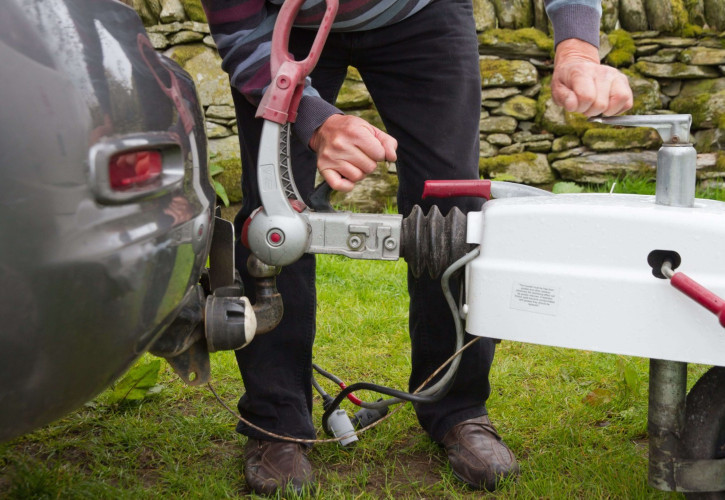
This is a really simple but really important edition of our blog. If you neglect to follow the steps within it, you could find yourself in the middle of a scene from Mr Bean – driving away in your car but with your new and used caravans from Spinney left stranded somewhere behind…
Your first-time towing might have been when you drove away from Spinney with your new (or new to you) caravan. If that’s the case, we’d advise that the second time isn’t when you set off on your first holiday in it. You should spend a bit of time acquainting yourself with your new caravan for sale, and have the experience of towing, perhaps taking a trip for a couple of hours just to get used to how it feels and how it handles.
In addition, you should set some time aside to practice hitching your caravan to your car. It’s actually a fairly straightforward process, but you did ought to familiarise yourself with it so that you can be well prepared when you’re actually out on the road. There are steps to take, and we list them here.
Hitching Your Caravan: The Process
1. Check the Interior
It’s important to check the inside of your caravan, so that you can make sure that it is loaded correctly, and the payload weight is within legal limits. Consult your caravan documentation to find out exactly what these limits are for your vehicle. In addition, make sure that all windows and roof lights are closed before travel.
2. Check the Tyres
It’s important that your tyres are in good condition, so no cracking or bulges, and that they have plenty of tread. Check that your caravan’s tyre pressure is correct using a tyre pressure gauge. You should also make sure the tyre pressure of the vehicle that is going to be doing the towing is correct, too.
3. Brake, Ball and Steadies
Make sure that your caravan’s parking brake is on and that the jockey wheel is wound down enough for the coupling head to be higher than the towball on the car. Make sure that the towball is grease-free, which will allow the caravan stabiliser hitch to perform its job well. Give yourself a couple of inches of height clearance for the hitch over the towball to avoid nasty collisions when reversing. Wind up the corner steadies (these are the stabilisers designed to stop your caravan from tipping when you walk from side to side or end to end, inside of it.
4. Get Help Reversing
Hitching a caravan to a car is so much easier if you have someone to assist you while you are attempting to do it. They should stand off to one side, with the drawbar and the towball in sight. Establish a series of hand signals in advance of the manoeuvre so that there is no confusion. Make sure you both know exactly what the signal for stop is. It doesn’t have to be hand signals; it could be verbal! As you reverse your car towards the front end of the caravan, your helper can slowly wave you back, offering indications of the position of the coupling head so that you know where to reverse. Alternatively, some cars have ‘reversing cameras’ which include a towbar view. These devices transmit footage to a monitor in the dash, allowing you to see just what’s what.
5. Electrics and Cabling
Plug in the electrical cabling and run through a checklist. Please note that more modern cars (and vans) have 13-pin electrics, whilst older vehicles have two seven-pin plugs. You will need a Y-shaped adapter cable to link a 13-pin to twin seven-pin. All electricals should only be connected when sockets and plugs are dry, and only when the car’s ignition is switched off. There should be some slack in the cabling – enough for a tight turn, but not so much that the cable will scrape along the road. If the cable is long, loop it around the jockey wheel column to reduce length and if it has to cross left or right, it should be passed over the drawbar, not under it.
6. Check the Lights
Your helper can tell you whether the tail-lights and indicators, plus hazard lights, are functioning correctly on the caravan. Remember to set the indicators both left and right to establish that both are working properly. If any bulbs have failed, it’s important to switch them out before you set off.
7. Fit the Number Plate
Refit your numberplate to the caravan, if you have previously removed it for security purposes when your caravan has been off the road or in storage, or if the numberplate is also used with another towed vehicle such as a trailer.
8. Straighten Up to See
Take a moment to align the car and caravan so that they are in a straight line, and once in this position make sure to set your towing mirrors so that they show an equal amount of caravan either side. The best kind of towing mirrors to use are vertical format, as they offer good rear vision plus a proximity view to (say) kerbs of your caravan’s wheels.
9. Make Final Checks
Make sure that the caravan’s corner steadies are raised, and the winder is packed away. Pack any levelling ramps or wheel chocks away. Ensure that the caravan stabiliser handle is properly engaged, the handbrake is off, the jockey wheel is lifted and secure and that the breakaway cable is properly attached.
We’re sure that once you’ve tried this process out a couple of times you will have got the hang of it and will feel confident to get yourself out on the road in your new caravan. Here at Spinney we have new caravans for sale and a selection of used caravans too – and we’ll be pleased to advise you on any aspect of caravan life including the issues discussed in this blog. Simply get in touch with our team and let’s talk!

Written by Charlie Holland

Vogue
Exclusive Vogue - a special for everyone!
View our selection of Vogue special edition leisure vehicles available, only found here at Spinney.
Spinney branches
Spinney dealership