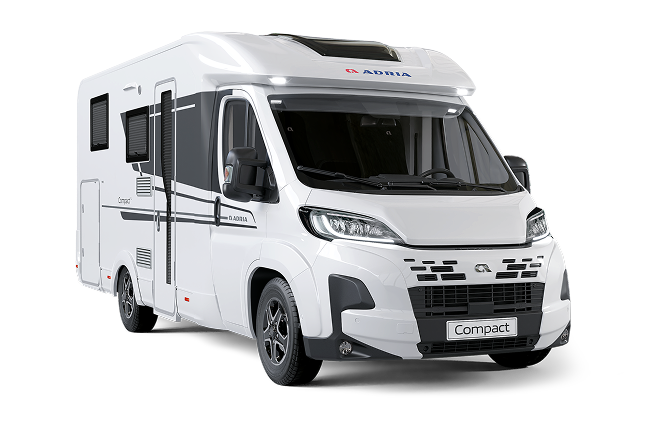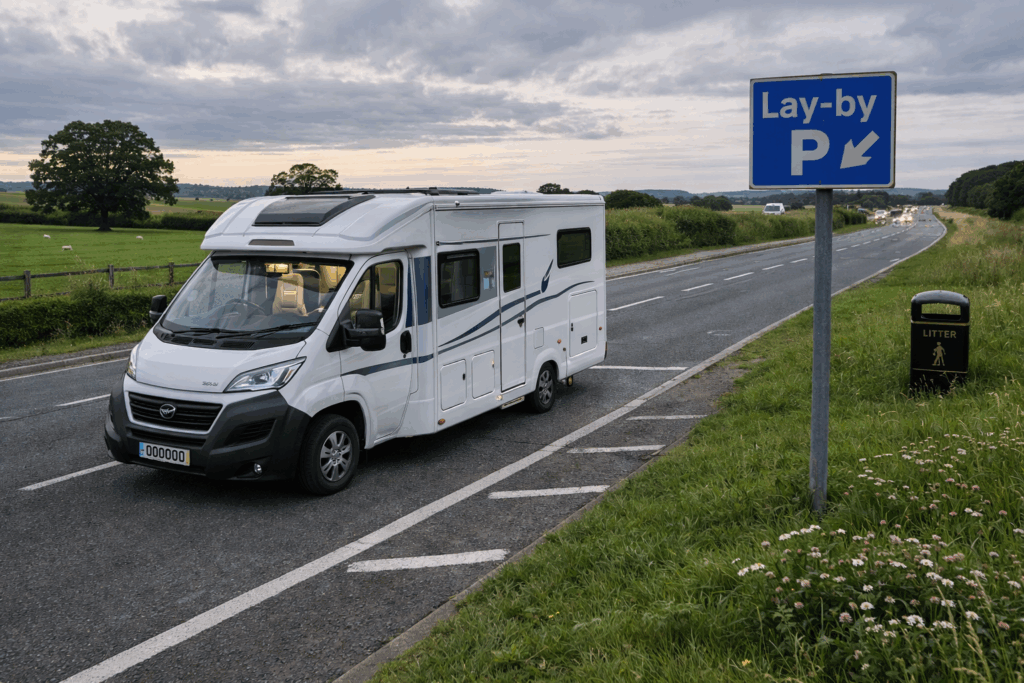
In short, yes, you can sleep in a motorhome in a lay-by, but only under certain conditions. Whilst there isn’t a specific law that makes it illegal to park or sleep in a motorhome in a lay-by, it is treated as a grey area. You should treat it as a temporary stop rather than a campsite, and always check that there are no local restrictions, signage prohibiting it or safety concerns.
Is It Legal to Sleep in a Lay-By in the UK?
Sleeping in a motorhome is expected, but whether you can stay in a lay-by depends on local restrictions. These may include:
- No overnight parking signs
- Time-limited parking
- Weight or vehicle type restrictions
- Traffic regulation orders (TROs)
If no restrictions are in place, it’s generally tolerated for rest purposes, provided you leave no trace and dispose of waste properly.
Are Lay-Bys Safe for Overnight Stays?
Safety varies significantly depending on location. Quiet rural roads are generally safer and more suitable but can be secluded in the event of emergencies, whereas busy a-roads or dual carriageways are less safe due to the traffic and noise. When choosing a lay-by we suggest you prioritise good visibility, low traffic flow and distance from fast-moving roads as well of course, as distance from amenities in case of emergencies, think food or medical care.
Rules to Follow When Staying in a Lay-By
Whilst there’s no single law covering lay-by stays, several UK laws and local regulations apply. In practice, this means following a few key rules:
- Don’t set up camp: Avoid awnings, tables or chairs. Many councils restrict camping behaviour through local bylaws or Traffic Regulation Orders, even where parking is permitted.
- Stay within your vehicle footprint: Extending beyond it can be seen as obstruction or informal camping under the Highways Act 1980.
- Avoid running generators where possible: Excessive noise can be treated as a statutory nuisance under environmental legislation.
- Don’t block access or create a hazard: Obstruction and unsafe parking are enforceable under the Highways Act 1980 and Road Traffic Act 1988.
- Leave no waste behind: Littering or fly-tipping is an offence under the Environmental Protection Act 1990 and can result in fines.
This keeps it factual, removes repetition, and reads like proper guidance rather than a stitched list.
How Long Can You Stay in a Lay-By?
You should only stay in lay-bys for short breaks and not extended stays. Typical use lay-bys for a few hours rest or one overnight stop. Anything longer could risk enforcement action, fines or complaints from locals.
Lay-bys should be considered as a fallback, not a primary option. Better alternatives include dedicated motorhome stopovers, campsites or farm based overnight locations. These locations offer greater safety, legal clarity and facilities such as waste disposal and water.
For a full breakdown of legal and recommended parking options, see our recent Motorhome Parking Guide.
Top Tips For Parking your Motorhome in a Lay-By
If you are planning to park your motorhome in a lay-by, here are a few tips we recommend:
- Park in well-lit areas to enhance security and discourage potential intruders.
- Lock your doors and windows, and consider using additional security measures such as alarms or steering wheel locks.
- Use blinds or curtains for privacy and to keep the interior of your motorhome from being visible.
- Look into parking apps like Park4night and Brit Stops to find safe and legal overnight spots.
To conclude, avoid staying overnight in a lay-by if there is clear signage prohibiting it, it’s on a high-speed road or you are near residential properties where disturbance is likely. If you are planning regular trips, it is worth considering more reliable overnight solutions. Explore motorhome-friendly campsites that have full facilities and review UK motorhome stopovers for shorter stays.

Written by Charlie Holland
Frequently Asked Questions
Europe is often more accommodating to motorhome owners, with designated overnight parking spots known as camper stops. These will often provide basic facilities that you can use overnight including drinking water, toilets, waste disposal and electricity hook-ups.
Yes, if there is clear signage or local parking regulations you may be fined for sleeping in a lay-by.
It depends on the location; rural and low traffic areas are generally safer than busy roads such as dual carriage ways.
No. You should not set up external equipment or treat it as a campsite. This could lead to local authorities asking you to move on or presenting you with a fine.


Vogue
Exclusive Vogue - a special for everyone!
View our selection of Vogue special edition leisure vehicles available, only found here at Spinney.
Spinney branches
Spinney dealership