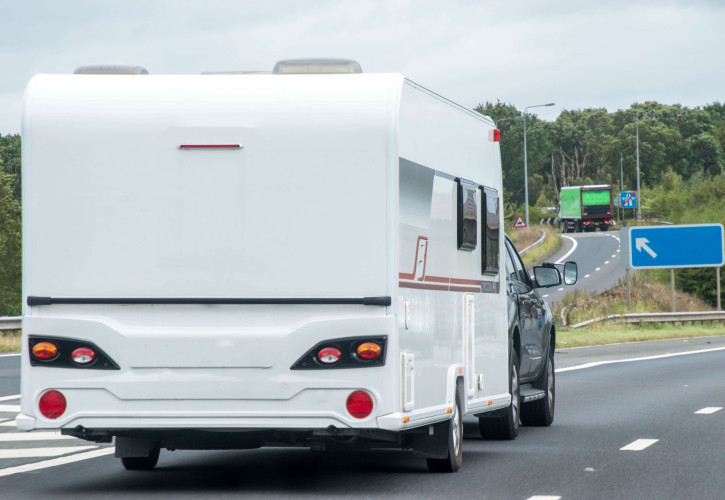
If you’re new to the caravan life or are deciding whether caravanning could be worth the investment, towing for the first time can be quite overwhelming. We’ve put together the perfect guide to help you get started. There are a number of key things to think about and checks to make before you set off on your next adventure.
Ensure you have the correct driving licence
Under the current standard driving license regulations in Great Britain (introduced on 16th December 2021) you’re permitted to drive any vehicle up to 3,500kg and tow a caravan of the same weight behind it. You don’t have to take an additional car and trailer driving test to do so. You can find the full details about your driving licence and towing limits on the GOV.UK website.
Check the width and length rules
It’s crucial to take note of the maximum caravan measurements permitted on a standard driving licence:
- The maximum width for your caravan is 2.55 metres
- Maximum length of your caravan is 7 metres
Allow more time and space
When towing, you will need to allow more time for:
- Accelerating or pulling out of a junction: You’ll definitely not be able to do this as quickly with the weight of the caravan behind you, so allow more time to pull out in front of other vehicles.
- Braking: Put simply, you should brake earlier than you usually would. The weight of the caravan increases your momentum, and subsequently increases the stopping distances required during towing.
- Navigating corners: Towing a caravan means additional length. This is particularly noticeable on sharp bends and winding country roads. In these locations you should make sure that you leave more time and begin turning the wheel sooner when approaching bends to prevent the caravan from swerving outwards.
- Width: Account for the additional width that comes with towing when driving through smaller gaps. You may not be able to pass through the same spaces with your caravan as your car can!
Remember the speed limits
It is important to remember that signposted speed limits do not apply to people towing a caravan. You must become familiar with your limits accordingly.
- On the motorways, the regular speed limit for cars is 70mph. In order to keep your vehicle and caravan stable when towing, this reduces to 60mph.
- To prevent motorway congestion caused by slower vehicles, you must not use the outside lane when there are three or more lanes.
- On dual carriage ways where the regular limit is also 70mph, you’re not permitted to exceed 60mph (unless that is the regular limit, as is the case on many carriageways).
- On single carriageways with a 60mph speed limit, cars towing a caravan must adhere to a 50mph limit.
- Other limits: On roads where the regular speed limit is 20 – 50mph, you are allowed to drive at the same speed when towing as you would ordinarily.
Towing in challenging weather
- As a rule of thumb, strictly avoid towing in winds that exceed 50mph. This can make your caravan extremely unstable and is a real danger to driving and life.
- Though rain is very common in the UK, it’s important to remain alert during a downpour and afterwards, when surface water and the risk of skidding may remain high. To prevent aquaplaning and losing traction with the road, reduce your speed, brake gradually and avoid large areas of surface water where possible.
- Although it is not recommended to tow in the event of snow or ice, reduce your speed and allow significantly more time to brake, whilst maintaining caution around corners and along country roads. Sticking to well-gritted main roads is the best option if journeying during these conditions cannot be avoided.
- In times of low visibility, such as heavy rain or fog, pull over where it is safe to do so, and wait until the worst of it has passed.
Preventing ‘snaking’
The term ‘snaking’ refers to the lateral swaying movement of the caravan while you’re driving. If ignored, your vehicle may be dragged by the caravan, which makes it difficult to maintain overall control.
You can prevent snaking by taking your feet off the pedals to reduce your speed (avoiding using the brakes when doing so) and keep the car going straight. This should help to re-balance both car and caravan. To prevent this from occurring altogether, you can ensure that your vehicle and caravan are a good match:
- It is recommended that the weight of your loaded caravan should not be more than 85% of your car’s ‘kerb weight’ (your car’s weight without luggage or occupants).
- You can check your car / caravan’s kerb weight by visiting your local weighbridge. Locate your nearest bridge.
Reversing Tips
- This will differ greatly from reversing without a caravan in tow. The caravan will travel in the opposite direction to the direction you turn the wheel, thus you should continue to turn the wheel the opposite way to the desired direction of travel.
- For example, if you want the caravan to go right, you should start turning the wheel left. When the caravan has lined up with the direction you want to go, adjust the wheel back to the centre to straighten up.
- Always ensure that when towing a trailer, you reverse much more slowly that you normally would. Reversing too quickly at an extreme angle can cause jack-knifing, which is when the side of the car and side of the caravan move towards one another until they reach a ‘V’ or ‘L’ shaped angle, stalling further movement.
- Adjust your mirrors to see the sides of the trailer which will ensure greater accuracy when reversing, particularly into confined spaces.
- At Spinney, your experience is important to us. If you would like to have a tutorial on collection, simply ask one of the team and we’ll talk you through it!
Equipment checks
To guarantee that you are meeting UK regulations, you must make sure that you have the correct equipment to use when towing:
- Caravan number plate: Must be the same as the one displayed on your car.
- Towing bar: Complete with a ‘towing number’ and details of the vehicle it has been approved for.
- Towing mirrors: To be fitted on your car to maintain visibility of the road behind you in the event that your caravan is wider than your car.
- Brakes: Your caravan must have its own brake system if it weighs over 750kg
- Breakaway cable: Must be fitted to prevent complete detachment from your vehicle if the tow bar becomes unattached.
- Safety checklist: You can refer to the complete guide on the safety checks to make before towing on GOV.UK
- Equipment you may find useful:
- Hitch cover: Used to cover the tow bar at the front of the caravan to preserve the hand brake and jockey wheel and prevent rust.
- Anti-snaking device: This is a great device for those new to towing. The device, fitted to the caravan chassis, automatically applies the caravan brakes if you encounter hazards such as strong winds which trigger snaking. Many caravans are now fitted with these as standard. Check with us before making your purchase.
These can be found in our accessory shop.
Practice
It’s always a good idea to practice something when you are new to it. Skills such as reversing will most likely require some practice before your holiday. You don’t want to get stuck in any tight spaces when parking without any idea of how to reverse out of them!
You can try it out yourself at some of the bigger caravan shows with an instructor, or you can schedule a set of towing lessons with a service provider near you to ensure you feel confident on your first trip.

Written by Charlie Holland

Vogue
Exclusive Vogue - a special for everyone!
View our selection of Vogue special edition leisure vehicles available, only found here at Spinney.
Spinney branches
Spinney dealership