Motorhome Parking Rules in the UK – 2026 Update
Published: 6th November 2023 Last updated 6 months ago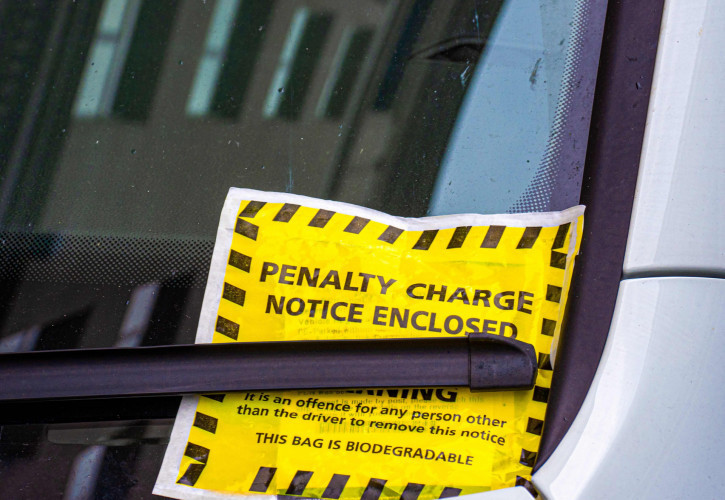
- Motorhome Parking Rules in the UK (2026) – Quick Summary
- The legal framework behind motorhome parking in the UK
- Is it legal to park a motorhome anywhere in the UK?
- The difference between parking and ‘camping’
- Can you park a motorhome overnight in the UK?
- Parking on streets and public roads
- Car parks, TROs and ETROs (2026 update)
- Experimental Traffic Regulation Orders (ETROs)
- Regional differences across the UK
- What are the recent motorhome parking changes across the UK (2025–2026)?
- What is managed provision vs restriction?
- Height barriers and access limitations
- Can I park on private land and campsites?
- Enforcement, fines and penalties
- What is responsible motorhome use?
- Can you park a motorhome on your driveway?
- Motorhome Parking and How to Choose the Right Vehicle
- Motorhome Parking in the UK: A 2026 Snapshot
- Key facts to know in 2026:
Since motorhome parking rules in the UK are becoming more complex, more localised, and more enforced, it is important to stay up to date with these changes. While the main laws haven’t changed much, how councils enforce them has. This is due to more people using motorhomes, making it important to keep up with local rules.
In 2026, changes such as the expanded use of Experimental Traffic Regulation Orders (ETROs), enforcement powers around parking, and regional restrictions mean that any previous rules about parking or overnight stays may no longer apply.
This guide provides a comprehensive and current overview of UK motorhome parking rules:
Motorhome Parking Rules in the UK (2026) – Quick Summary
Motorhome parking rules in the UK are now far stricter. Whilst the legal framework has not changed, the actual enforcement of these rules has increased significantly, and rules are now applied at a local level. Here’s what you need to keep in mind:
- You cannot park a motorhome freely without permission or clear signage allowing it
- Overnight stays are usually restricted unless you are on private land or a designated site
- Local authorities enforce rules through Traffic Regulation Orders (TROs)
- Experimental Traffic Regulation Orders (ETROs) mean rules can change quickly
- Enforcement is increasing, particularly in coastal and high-tourism areas
- Height barriers and local restrictions are limiting access to standard car parks
- Designated motorhome stopovers and campsites are becoming the primary legal option
The key principle: If permission is not clearly granted, assume the restrictions apply.
As a UK motorhome dealership working directly with customers across the country, we see first-hand how parking rules vary between regions. This guide is based on both current legislation and real-world changes affecting motorhome owners in 2026.
The legal framework behind motorhome parking in the UK
Motorhome parking in the UK is not regulated by a single law. Instead, it is controlled through a combination of national legislation and local authorities.
The most important legislation is the Road Traffic Regulation Act 1984 which gives local authorities the power to regulate parking through Traffic Regulation Orders (TROs). These rules allow local councils to control how roads and public car parks are used, including restrictions on overnight stays.
Enforcement of parking rules is carried out under the Traffic Management Act 2004, which gives local authorities the power to hand out fines and penalties.
In addition, the Highways Act 1980 allows action to be taken in situations where a vehicle obstructs a public road or pavement.
In Scotland, access rights are defined by the Land Reform (Scotland) Act 2003 – However, these rights apply only to non-motorised access and do not permit motorhome parking without permission.
Together, these laws form the foundation for all motorhome parking rules in the UK. Local authorities apply them through specific restrictions, enforcement policies and signage.
Is it legal to park a motorhome anywhere in the UK?
There is no general legal right to park a motorhome in the UK freely.
In England, Wales and Northern Ireland, parking on land without permission can be considered trespassing. Trespass is a civil matter under UK common law, allowing landowners to request the removal of a vehicles or, on occasion, even take further action.
In Scotland, although access rights are broader, they still don’t extend to motor vehicles. Motorhome users must still comply with land ownership rules and local restrictions.
As a result, you must always either have permission from the landowner or park in a location where it is explicitly permitted.
The difference between parking and ‘camping’
A large aspect of UK motorhome regulation is the distinction between parking and using it as your accommodation.
A motorhome might be legally parked during the day, but once it is used for sleeping, cooking or as a living space, it can fall under restrictions that forbid overnight stays or camping.
This is enforced through local authority powers under the Road Traffic Regulation Act 1984 and related bylaws.
Can you park a motorhome overnight in the UK?
Overnight motorhome parking in the UK is an increasingly regulated area. Although there is no single legislation that bans you from sleeping in a vehicle, the act of staying overnight somewhere is controlled through a mix of local authorities, land ownership rights, and parking restrictions.
In practice, this means that parking a motorhome and using it as a living space are treated as two different things. A vehicle might be legally parked somewhere during the day, but once it is used for sleeping or cooking, it falls within restrictions imposed by Traffic Regulation Orders under the Road Traffic Regulation Act 1984.
More so than ever, local authorities are using these powers to ban overnight stays in car parks, coastal areas and tourist destinations. These restrictions are legally enforceable and are often supported by clear signs specifying time limits, prohibited activities, or overnight bans.
In Scotland, although access rights are broader under the Land Reform (Scotland) Act 2003, they don’t extend to motor vehicles. As a result, overnight motorhome parking is still subject to local restrictions and land permission. Increased pressure on routes such as the North Coast 500 has led to even more enforcement and the introduction of ‘No Overnight Parking’ areas.
Across the UK, this is consistent:
- Overnight stays require either landowner permission or a designated location
- Parking alone does not imply the right to remain overnight
- Enforcement is becoming more visible and consistent in popular areas
Parking on streets and public roads
Motorhomes are allowed to be parked on public roads if they meet the standard legal requirements, including valid tax, insurance and MOT. However, the legality of parking on a road does not automatically extend to using the vehicle as your accommodation.
The most important legal consideration in these situations is obstruction. Under the Highways Act 1980, a vehicle must not impede traffic flow, restrict visibility, or obstruct pedestrian access. Due to their size, motorhomes are more likely to breach these conditions, particularly in residential areas or on narrow streets.
Recent government guidance has strengthened enforcement around pavement parking, giving local authorities the ability to issue fines where vehicles block pedestrian routes or create accessibility issues. This has had a huge impact on larger vehicles, particularly motorhomes.
While there is no explicit national law that forbids you from sleeping in a vehicle on a public road, local authorities can still take action where behaviour is deemed inappropriate, where complaints have been made, or where additional restrictions are in place. This means that overnight use of a motorhome on a public road is often discouraged and may lead to enforcement action depending on where you are.
Car parks, TROs and ETROs (2026 update)
Public car parks across the UK are governed by Traffic Regulation Orders (TROs), which are created under the Road Traffic Regulation Act 1984. These provide local authorities with the legal ability to control how parking areas are used.
In many cases, TROs extend beyond parking restrictions and explicitly ban activities associated with overnight stays. This commonly includes sleeping in vehicles, cooking, or any behaviour that indicates the vehicle is being used as your living space.
Breaching a TRO constitutes a parking offence which can result in a fixed penalty notice, typically ranging from £70 to £130 depending on the contravention and local authority penalty banding. These penalties are enforced under the Traffic Management Act 2004 through civil enforcement mechanisms.
Experimental Traffic Regulation Orders (ETROs)
A major development from 2025 and 2026 is the increased use of Experimental Traffic Regulation Orders (ETROs). These operate under the same legislative structure as TROs but allow councils to put into place temporary restrictions for up to 18 months to decide their effectiveness.
The use of ETROs has allowed local authorities to respond far more quickly to motorhome-related pressures, particularly in coastal and tourist areas. Instead of a consultation process, councils are able to implement restrictions, monitor their impact, and then decide whether they want to make them permanent.
For example, Cornwall Council has used these powers to introduce stricter overnight parking controls because of the increased motorhome usage. This means rules are changing to become more flexible.
For motorhome users, this means that parking rules are no longer static. Regulations can change within very short time spans, and reliance on apps or outdated guidance is far more unreliable. Physical signs at the location should always be treated as the most trustworthy source of information.
Regional differences across the UK
Although the legal framework for motorhome parking is consistent across the UK, its application varies significantly depending on the priority of local authority, infrastructure capacity, and popularity of the area.
In England and Wales, there has been a shift towards more localised control. Councils in coastal, rural and tourist areas are increasingly using TROs and ETROs to restrict overnight stays and are addressing issues such as congestion and waste disposal.
Even in Scotland, motorhomes are still regulated by local councils. Whilst the more remote areas often offer greater flexibility, popular areas are now facing tighter regulations and more consistent enforcement.
Northern Ireland follows a similar legal structure to England and Wales but has fewer facilities for motorhomes. This means people are limited to campsites and authorised locations for overnight stays.
What are the recent motorhome parking changes across the UK (2025–2026)?
Motorhome regulation in the UK is now decided by local authorities rather than national policies. The following examples illustrate how different regions are responding to increased demand.
- In Cornwall, stricter restrictions have been put into place across car parks, as well as enforcement measures and ongoing policy consultation
- Along Scotland’s North Coast 500 there is stricter enforcement, the introduction of ‘No Overnight Parking’ zones, and monitoring of roadside stopping points
- In Moray Council, the council has introduced a pilot scheme in Burghead that allows controlled overnight parking for motorhomes
- East Devon District Council has expanded its motorhome stopover scheme in Exmouth to offer regulated overnight parking with defined conditions and facilities
- Across the UK more broadly, there is a shift towards both stricter enforcement and the development of designated alternatives.
What is managed provision vs restriction?
A trend in 2026 is the separation between restriction and provision in how local authorities control motorhome use.
Particularly in coastal regions and national parks, councils are using their powers (under the Road Traffic Regulation Act 1984) to introduce restrictions through Traffic Regulation Orders and Experimental Traffic Regulation Orders. These limit overnight stays, reduce congestion, and address environmental and community concerns.
At the same time, many authorities are recognising the economic side of motorhome tourism and are coming up with alternatives. These include motorhome stopovers, time-limited overnight parking schemes, and paid facilities.
This reflects a wider shift. Motorhome use is not being completely restricted, but it is being directed into managed environments where infrastructure and oversight are in place. Informal and unregulated use of public space is less allowed, while authorised provision is expanding in a more structured way.
Height barriers and access limitations
Physical restrictions are now a factor in motorhome parking across the UK.
Height barriers, typically set between 2.0 metres and 2.2 metres, are more often now installed in public car parks, particularly in urban centres, coastal locations, and tourist destinations. Whilst they are specifically targeted at motorhomes, they still exclude larger vehicles from these standard parking places.
These barriers are often used alongside Traffic Regulation Orders to control access and stop long-term or overnight stay in car parks. In many cases, they are part of a broader strategy to manage capacity, reduce misuse, and prioritise short-stay parking.
As a result, motorhome users increasingly need to rely on designated parking areas or specific facilities.
Can I park on private land and campsites?
Parking on private land is only permitted where the landowner has given their consent. This includes driveways, farmland, and on privately operated land.
However, staying on land for overnight stays might still be subject to planning considerations or local restrictions, particularly if they’re being used regularly. For individual and temporary use, permission from the landowner is necessary.
Campsites and certified motorhome sites remain the most reliable and legally secure option for overnight stays. They offer essential facilities such as waste disposal, water access, and electrical hook-ups.
As local authority restrictions increase elsewhere, these sites are becoming a central part of the motorhome ecosystem, providing a compliant alternative to informal parking.
Enforcement, fines and penalties
Parking enforcement in the UK is carried out under the Traffic Management Act 2004, which allows the enforcement of parking contraventions by local authorities.
Breaching a Traffic Regulation Order constitutes a parking contravention. This can result in a Penalty Charge Notice (PCN). Charges are set by local authorities, but they typically range from £70 to £130 depending on the offence and local penalty banding.
In addition to financial penalties, enforcement action may include:
- Requests to move on
- Increased monitoring of the area
- Escalation in cases of repeated or persistent non-compliance
In some circumstances, particularly where obstruction is involved, additional action may be taken under the Highways Act 1980.
These recent enforcement trends indicate a shift towards more consistent and visible application of these powers, particularly in areas where motorhome usage has increased significantly.
What is responsible motorhome use?
Many of the restrictions introduced across the UK in recent years are a direct response to misuse.
Key issues identified by local authorities include:
- Improper disposal of grey water and toilet waste
- Noise and anti-social behaviour in residential/rural areas
- Obstruction of roads and access routes
- Unauthorised overnight stays
These behaviours have contributed to increased regulation and enforcement.
Areas that have experience this misuse are more likely to introduce restrictions, while those that implement managed schemes often do so with stricter controls and enforcement mechanisms.
Maintaining access to flexible motorhome travel in the UK is increasingly dependent on compliance with local rules, appropriate use of facilities, and consideration for local communities and environments.
Can you park a motorhome on your driveway?
In most cases, yes, but it is not always guaranteed!
Parking a motorhome on a private driveway is generally okay, as it falls within normal use of residential property. However, there are important exceptions that can restrict or prevent this.
The most common restriction comes from restrictive covenants, which are the legal conditions of a property. These are often found in new-build developments and may prohibit the parking of caravans, campervans or motorhomes on driveways.
If a covenant is enforced, homeowners may be required to remove the vehicle and, in some cases, could face legal action.
There are also situations where planning considerations may apply. While simply parking a vehicle is not usually considered a change of use, issues can arise if:
- The vehicle is used for accommodation on a regular basis
- The vehicle significantly impacts neighbours or the surrounding area
- The property is subject to specific local authority restrictions
Recent reporting has highlighted cases where homeowners have been challenged or taken to court over parking large vehicles such as motorhomes on residential property, particularly where covenants or local objections are involved.
In practice:
- Parking on your driveway is usually allowed
- You should check property deeds for restrictive covenants
- Local disputes or complaints can lead to enforcement or legal action
Motorhome Parking and How to Choose the Right Vehicle
Motorhome parking in the UK is becoming more structured, and your choice of vehicle now plays a much bigger role than it did previously.
Size, weight and layout can all affect where you can park, whether you can access car parks, and if you can stay overnight legally. Larger motorhomes could be restricted by height barriers and space limitations, while smaller vehicles can offer more flexibility in certain locations.
As a specialist motorhome dealership, Spinney works with customers across the UK to help match vehicles to how they will actually be used. This includes considerations such as travel style, parking requirements, and the types of locations you plan to visit.
If you are considering buying a motorhome, it is worth factoring in not just comfort and features, but also how practical the vehicle will be under current UK parking restrictions.
Motorhome Parking in the UK: A 2026 Snapshot
Motorhome parking in the UK is now defined less by national law and more by how local authorities apply it.
Informal, unregulated parking is being phased out in favour of controlled, enforceable and designated use of space.
Key facts to know in 2026:
- There is no general right to park a motorhome overnight; permission is required in almost all cases
- Traffic Regulation Orders (TROs) are the main enforcement tool; these legally restrict parking, overnight stays and vehicle use
- Experimental Traffic Regulation Orders (ETROs) are increasing; councils can introduce new restrictions quickly, often without long notice
- Enforcement is more consistent and visible, particularly in coastal areas, national parks and tourist routes
- Penalty Charge Notices typically range from £70 to £130, issued under civil enforcement powers
- Height barriers are limiting access to public car parks; most motorhomes are excluded from standard parking infrastructure
- Designated motorhome stopovers are increasing; councils are shifting towards managed provision rather than tolerance
- Misuse causes this regulation; waste disposal, obstruction and anti-social behaviour are key factors

Written by Charlie Holland
Frequently Asked Questions
No. Parking is subject to land ownership and local authority restrictions.
Generally, no, unless you have permission or are in a designated area.
Not illegal, but local enforcement may apply.
Legal tools used by councils to control parking under the Road Traffic Regulation Act 1984.
Temporary parking restrictions used by councils for up to 18 months.
Yes, but motorhomes are still restricted despite broader access rights.
No, lay-bys are for short rest stops only.
Typically, £70–£100 under civil enforcement rules. These will vary check local authority website for more info.
In most cases, yes. Parking a motorhome on your driveway is generally allowed as part of normal residential use. However, some properties have restrictive covenants that may prohibit parking caravans or motorhomes, particularly in visible areas. You should check your property deeds.
- Motorhome Parking Rules in the UK (2026) – Quick Summary
- The legal framework behind motorhome parking in the UK
- Is it legal to park a motorhome anywhere in the UK?
- The difference between parking and ‘camping’
- Can you park a motorhome overnight in the UK?
- Parking on streets and public roads
- Car parks, TROs and ETROs (2026 update)
- Experimental Traffic Regulation Orders (ETROs)
- Regional differences across the UK
- What are the recent motorhome parking changes across the UK (2025–2026)?
- What is managed provision vs restriction?
- Height barriers and access limitations
- Can I park on private land and campsites?
- Enforcement, fines and penalties
- What is responsible motorhome use?
- Can you park a motorhome on your driveway?
- Motorhome Parking and How to Choose the Right Vehicle
- Motorhome Parking in the UK: A 2026 Snapshot
- Key facts to know in 2026:

Vogue
Exclusive Vogue - a special for everyone!
View our selection of Vogue special edition leisure vehicles available, only found here at Spinney.
Spinney branches
Spinney dealership