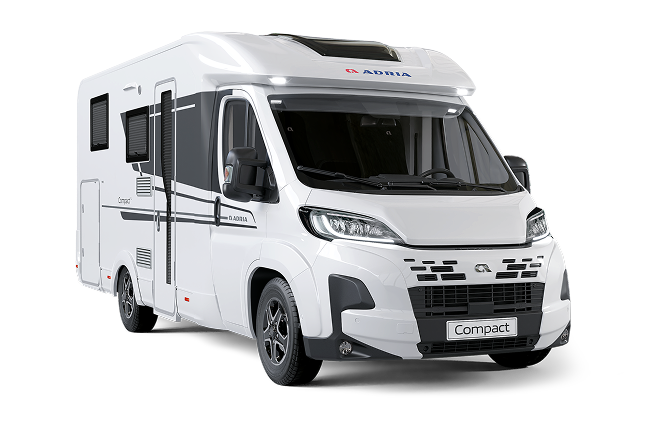
Perhaps surprisingly, some people still ask what the difference between a caravan and a motorhome is, and which is better?
‘Better’ is almost completely subjective, and depends entirely on what you expect from the vehicle, in terms of day to day living and the on the road experience. They are both leisure vehicles which will certainly open up a new lifestyle for you once you have purchased, but the way in which they do so differs. A key distinction between the two lies in the way they are powered. A caravan is not self-propelling and requires a motorised towing vehicle to be able to move, while a motorhome is a self-contained unit with an engine, therefore its own motorisation (so can be driven via the enclosed driving cab).
What do leisure vehicles offer?
A really crucial part of owning a leisure vehicle is something mental that it provides – a sense of freedom. This is combined with a sense of comfort. Both caravans and motorhomes (and campervans) will foster a mentality of being able to break free of daily domestic responsibilities and hit the road at short notice – in the comfort of your own environment, your personal bubble. The possibility of spontaneous getaways for a weekend and extended vacations for a couple of weeks will become the norm in your thinking, and you will feel in full command of your destiny. Whether you choose to do so in a caravan or a motorhome is entirely up to you.
Differences Between a Motorhome and a Caravan
There are several differences between motorhomes and caravans – and they will have a direct influence on the way you live the holiday lifestyle. A crucial one is their mobility once you have reached your destination.
Driving:
A caravan and a motorhome are different propositions in terms of their drivability – in other words, the way they will handle on the road, and the necessary driving skills required to handle them. It is worth, if you can organise it, having a test run before you decide your purchase (if you are undecided as to which type of leisure vehicle to go for). You may find that you are more comfortable handling a motorhome than you are towing a caravan.
Both caravans and motorhomes have specific obligations to fulfil for driving.
The towing weight legality of a caravan depends on your driving test date and, obviously, you must only ever use a towing vehicle which is capable of handling the caravan’s weight. The Camping and Caravanning Club and the Caravan and Motorhome Club offer a matching service to members, so that the tow-capable vehicles are detailed for each potential caravan.
For motorhomes, anything under 3,500kg is legal on a standard UK driving licence, but anything above 3,500kg requires further testing including a medical assessment to achieve a new driving licence category (C1).
Parking and day to day outings:
With a caravan, you can park up and leave it in situ and use your car to explore the surroundings or run any errands. In other words, a caravan can stay exactly where you park it for the duration of your break, and will serve as a static base. This is, in some cases, why caravans are better than motorhomes.
In contrast, a motorhome is a self-contained option and therefore you won’t have a car with you so if you choose to go off exploring, the whole vehicle will be used and therefore move from place to place.
Running costs:
When balancing up the pros and cons of caravans and motorhomes, running costs often have a bearing. They are always worth considering carefully. Caravans also incur lower running costs as they don’t consume fuel and avoid annual MOT expenses (although, of course, the vehicle that is doing the towing will incur these costs – though they will already have been factored in to a domestic budget). Caravans are, typically, also more affordable to buy initially compared to motorhomes.
Interiors:
Layout configurations will vary between models, and there is a wide array of options from different manufacturers, but the living spaces within a caravan and a motorhome are broadly similar in concept. Both feature a social area with seating (and often a table of some kind), a kitchen, a washroom and somewhere to sleep (usually converting from seating, though motorhomes are also likely to have fixed beds). It is probable that any caravan has slightly less space than a motorhome (particularly if you are looking at mid-range or the larger A-class motorhomes), though there is always adequate space in a caravan if you choose wisely and consider your day to day living needs before making your choice.
The management of utilities will differ (in general, for instance, caravans do not have onboard wastewater tanks), but the underlying principle remains the same. A caravan and a motorhome will each provide you with a comfortable home from home, packed with convenient features to make day to day living easy.
When it comes to answering the question we posed right at the beginning of this edition of our blog, it is such a varying combination of factors that will make you decide whether a caravan or a motorhome is better. It really is down to personal preference. At Spinney, we stock many caravans and motorhomes and our experts are always on hand to discuss and offer advice so that you can make an informed choice – the right choice.

Written by Charlie Holland

Vogue
Exclusive Vogue - a special for everyone!
View our selection of Vogue special edition leisure vehicles available, only found here at Spinney.
Spinney branches
Spinney dealership