Owning your own motorhome provides a real opportunity to enjoy a special lifestyle, and with that comes the sense of freedom it brings. However, you won’t completely escape domestic rituals and chores, as there will be things you have to do regularly to ensure life on the road runs smoothly. You’ll have to manage responsibilities such as regular cleaning and waste disposal.
Unlike your traditional bricks-and-mortar home, leisure vehicles of all kinds operate independently from civic utilities. In other words, they’re not plumbed in to public systems and this necessitates travellers handling their waste in a hygienic and environmentally sound way. In this edition of our blog, we look at the various types of waste produced by motorhomes, and the best methods of disposal.
1. General domestic waste
A good way to live when travelling about in your motorhome is to treat it as you would your actual home and use bins of some kind for the little bits of packaging and other ‘rubbish’ that tend to build up around kitchen and bathroom use. In other words, make sure you store waste materials safely and securely, ready for disposal at some point in the near future, so that the waste doesn’t become general litter, which is scattered throughout your motorhome, making for an unpleasant environment.
Separate out your general domestic waste and the recyclable material where you possibly can, just like you would at home, so that it can be disposed of appropriately. Campsites should provide recycling areas, so if you are parked up and staying on one you are pretty much covered. If not, most supermarkets have an area to recycle packaging.
If there is nowhere in your vicinity to dispose of your litter, keep it onboard until you can find the appropriate place. Disposing of it with no regard for the environment or for anyone else is a strict no-no.
2. Waste water
As well as bins to store excess packaging, etc, motorhomes are equipped with tanks to store two types of waste water until they can be properly disposed of.
3. Grey Water
This is the name given to the waste water generated by the non-toilet plumbing systems in a motorhome – in other words the sink and shower (and, if you are lucky enough to have one aboard, the washing machine). Grey water does not contain any human waste and therefore could even be used for gardening purposes after proper handling.
The motorhome’s grey water tank is usually located beneath the chassis, and it can be emptied through a tap or hose attachment. When you are out on the road, the usual place for this is at designated disposal points found at campsites or motorhome service points. Resources like CAMpRA provide guidance on disposal points and motorhome-friendly areas. However, it’s very important not to use roadside drains or to empty black water into drains specifically designated for grey water.
4. Black Water
This is the name given to the waste water resulting from a motorhome’s toilet system (in other words, it contains urine and faecal matter). Water from the kitchen is also classed as black water, due to its contamination. Black water is not suitable for gardening purposes.
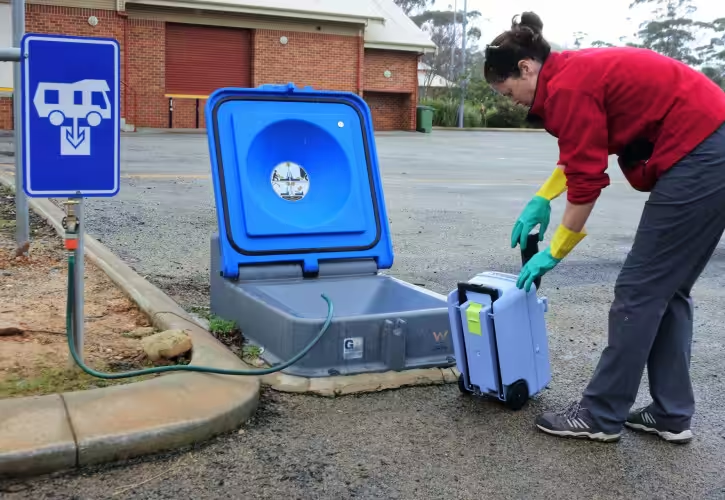
Motorhomes feature an integrated toilet with plumbing which leads to a cassette-style tank. This tank holds black water (i.e. human waste) which can be treated with chemicals or eco additives. When full, the tank can be easily removed from an external door on the motorhome for disposal.
Black water should never be emptied into natural water sources (i.e. a natural watercourse, surface drain, the ground or groundwater, etc). Instead, designated campsite facilities or motorway service stations with waste disposal points should be used (Chemical Disposal Points (CDP), Elsan disposal points or black waste disposal points). As a last resort you could use public toilets – but if you do, extreme caution is required to prevent spillage. Remote or quieter public toilets may offer alternatives for much more discreet disposal.
5. Waste water disposal when travelling in Europe
When you are travelling in Europe you will find that motorway service stations provide opportunities to dispose of waste – and refill freshwater tanks – for a fee, ensuring responsible management of the issue. Most areas – though not all – also provide facilities for emptying cassette toilets and motorhome waste water tanks for grey water.
Managing the waste in your motorhome requires adherence to proper disposal methods – but you should find that easily becomes part of your domestic routine while travelling. By understanding the different types of waste produced on board, and being aware of how they should be disposed of, motorhome owners can minimise their environmental impact and enjoy their travels responsibly. There can’t be anything better than that!
Here at Spinney, we stock a vast array of top quality new and used motorhomes which can provide you with the perfect travelling base. Simply get in touch if you see something on our website that you like the look of or make an appointment to visit.

Written by Charlie Holland

Vogue
Exclusive Vogue - a special for everyone!
View our selection of Vogue special edition leisure vehicles available, only found here at Spinney.
Spinney branches
Spinney dealership